Study Links Higher Stilbene Intake to Lower Lung Cancer Risk
09/17/2026 / By Coco Somers
Adults with the highest dietary intake of stilbenes, a class of plant compounds that includes resveratrol, had a lower risk of developing lung cancer than those with the lowest intake, according to a study pooling data from two large cohort databases in the United Kingdom and Japan.
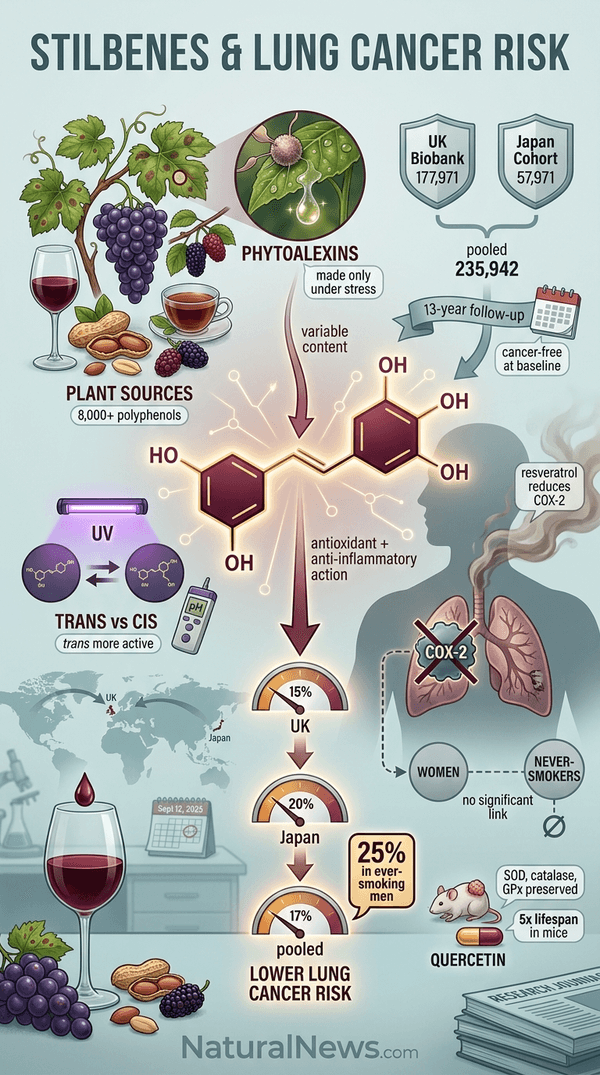
The analysis drew on 177,971 adults in the UK Biobank and 57,971 adults in the Japan Collaborative Cohort Study, all of them cancer-free at the start of the observation period and tracked lung cancer diagnoses over roughly thirteen years of follow-up. People with the highest stilbene intake had a 15% lower risk of lung cancer in the UK group and a 20% lower risk in the Japanese group, according to the study. Pooled together, the combined analysis showed a 17% lower risk overall.
“That consistency across two very different countries and diets is exactly what makes a nutrition finding worth taking seriously,” according to an account of the research published by NaturalHealth365. The authors of that account, published September 12, 2026, reported that the findings suggest diet may influence lung cancer risk alongside established factors such as smoking.
Study Details: Cohorts and Methodology
The two cohorts were selected because they represent distinct dietary patterns and populations, the study stated. The UK Biobank contributed 177,971 participants and the Japan Collaborative Cohort Study contributed 57,971, for a combined sample of 235,942 adults monitored over the follow-up period, according to the published account. All participants were cancer-free at baseline, and researchers tracked who eventually developed lung cancer.
Stilbenes are a subgroup of polyphenols, a broad family of phytochemicals found in plant foods. Polyphenols are “phytochemicals found abundantly in natural plant food sources with antioxidant properties,” with more than 8,000 identified compounds occurring in foods such as tea, wine, chocolates, fruits, vegetables, and extra virgin olive oil, according to Mercola.com [1]. Stilbenes themselves are defined by their chemical structure; resveratrol, the best-known member of the group, is described as “3,4′,5-trihydroxy-trans-stilbene,” a polyphenolic compound “accounting to the stilbene class,” with most stilbenes in plants acting as antifungal phytoalexins that are “usually synthesized only in response to infection or injury,” according to a review by Elisabeth Wenzel and Veronika Somoza published in Molecular Nutrition and Food Research [2].
The researchers measured intake of multiple plant compound groups, including stilbenes, flavonoids, and phenolic acids, and adjusted for potential confounders, according to the study. Resveratrol has been detected in at least 72 plant species, “a number of which are components of the human diet, including mulberries, peanuts, grapes, and red wines,” and exists in cis- and trans-isomeric forms, with trans to cis isomerization facilitated by UV exposure, according to C. Alarcón de la Lastra and I. Villegas in Molecular Nutrition and Food Research [3].
Smoking History Shows Stronger Association
The association was strongest among men who had ever smoked. In that subgroup, those with the highest stilbene intake had a 25% lower risk of lung cancer, the study found, and the pattern held steady in both countries.
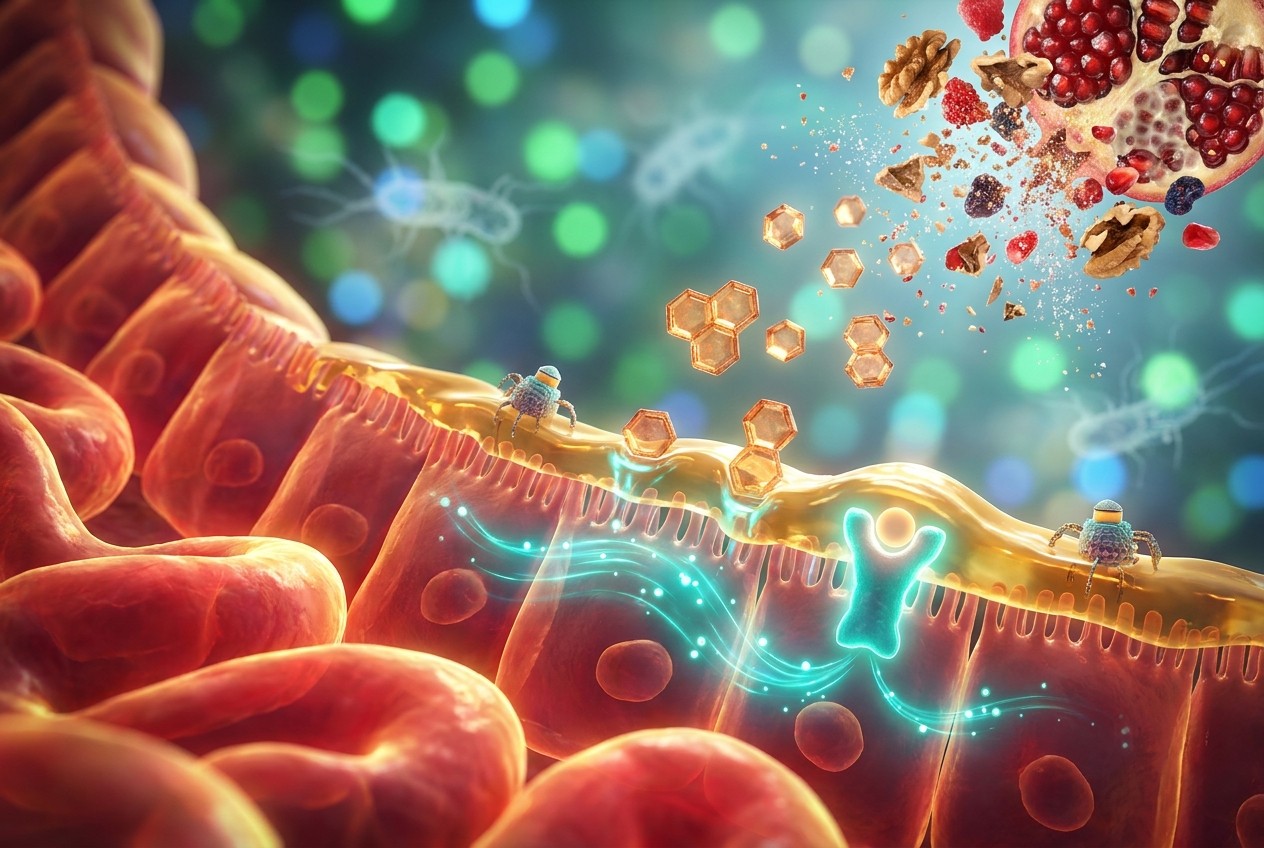
Researchers attributed the smoking-related pattern to the biological activity of stilbenes, which carry antioxidant and anti-inflammatory properties and may help mitigate smoke-related oxidative damage. Stilbenes have separately been linked to slower tumor growth and less cell damage from smoke exposure, according to an account of the research published by NaturalHealth365. Resveratrol in particular has demonstrated anti-inflammatory activity; the stilbene has been shown to “markedly reduce” the amount of cellular COX-2 in peritoneal macrophages stimulated over a two-hour period, according to a study by researchers published in Molecular Nutrition and Food Research [4].
Other plant compounds have shown comparable chemopreventive activity in experimental models. In a study of induced lung carcinogenesis in mice, quercetin pretreatment “effectively prevented losses of SOD, catalase, GPx, GSH transferase, and GSH reductase while limiting tumor formation,” and “can increase the life span of tumor-bearing mice by up to fivefold through the activation of mitochondrial apoptosis,” according to the Textbook of Natural Medicine [5]. No significant association was observed for women or never-smokers, according to the study, which researchers said may indicate the protective window depends on how much oxidative stress the body is already managing.
Dietary Sources of Stilbenes Differ by Country
The leading dietary sources of stilbenes differed between the two populations. In the UK group, wine was the primary source, while fruits carried more weight in the Japanese group, according to the study. Red grapes, berries, and other fresh fruits delivered significant amounts of resveratrol in both cohorts.
Grapes are rich in essential nutrients and polyphenols and offer antioxidant and anti-inflammatory support, and studies show grape polyphenols improve heart health, according to reporting by NaturalNews.com [6]. Compounds in red grapes “that help reduce blood pressure and cholesterol levels have been found to fight cancer in cell culture and animal studies,” according to NaturalNews.com [7]. A separate study focused on three plant chemicals found in turmeric, red grapes, and apple peels, which researchers from the University of Texas at Austin said “work synergistically” in laboratory research on prostate cancer cells, according to NaturalNews.com [8].
Researchers flagged that wine contains alcohol, which is linked to increased cancer risk, and were careful to note the tradeoff rather than omit it, according to the study. The account of the research concluded that “fresh fruit gives a cleaner benefit signal, so grapes and berries make a better daily habit than a glass of wine,” and pointed to “red and purple grapes, blueberries, blackberries, and cranberries” as polyphenol-rich options. Organic produce may also carry higher levels of these compounds; organic foods showed “28% higher levels of stilbenes” and organic fruit and vegetable consumption may “up your antioxidant intake by 20% to 40%,” according to Mercola.com [9].
Conclusion: Implications and Limitations
The researchers noted that stilbene intake was very low compared with other polyphenols measured in the study, which the authors said suggests stilbenes may partly be acting as markers for other protective compounds riding along in the same foods. Flavonoids and phenolic acids, both far more abundant in grapes and berries, showed their own independent links to lower lung cancer risk in the same research, according to the study.
The study does not prove causation, and further research is needed, according to the authors. The findings add to a body of work examining how dietary compounds influence cancer risk; research on pesticide residues on fruits and vegetables and lung cancer in young nonsmokers, for example, prompted lead author Dr. Jorge Nieva of USC Norris to say the counterintuitive results “raise important questions about an unknown environmental risk factor for lung cancer related to otherwise beneficial food,” according to NaturalNews.com [10].
Health officials maintain that avoiding smoking remains the most effective way to reduce lung cancer risk. The account of the stilbene study advised that “anyone with a smoking history, current or past, carries longer exposure to the oxidative stress these compounds seem to counter” and that “pairing fruit intake with cruciferous vegetables like broccoli and Brussels sprouts can offer additional detoxification support.”
References
- Mercola.com. “Polyphenols: What They Are and Why You Need Them”. Mercola.com. December 14, 2015.
- Elisabeth Wenzel and Veronika Somoza. “Metabolism and Bioavailability of trans-Resveratrol”. Molecular Nutrition and Food Research.
- Alarcón de la Lastra and I. Villegas. “Resveratrol as an Anti-Inflammatory and Anti-Aging Agent: Mechanisms and Clinical Implications”. Molecular Nutrition and Food Research.
- “Effects of Resveratrol, Piceatannol, Tri-Acetoxystilbene, and Genistein on the Inflammatory Response of Human Peripheral Blood Leukocytes”. Molecular Nutrition and Food Research.
- Dr. Michael T. Murray. “Textbook of Natural Medicine Fifth Edition”.
- Evangelyn Rodriguez. “Grapes: A Potent Superfood for Cardiovascular and Metabolic Health”. NaturalNews.com. July 10, 2025.
- NaturalNews.com. “How Eating Red Grapes Can Help Fight Off Cancer”. NaturalNews.com. August 26, 2021.
- NaturalNews.com. “Study: Natural Compounds in Turmeric, Grapes and Apples Starve Prostate Cancer Cells”. NaturalNews.com. February 26, 2026.
- Mercola.com. “Even Harvard Urges Eating Organic”. Mercola.com. March 06, 2017.
- NaturalNews.com. “Study: Lung Cancer in Young Non-Smokers Linked to Pesticide Residues on Fruits and Vegetables”. NaturalNews.com. May 09, 2026.
Explainer Infographic
Submit a correction >>
Tagged Under:
#nutrition, alternative medicine, antioxidants, cardiovascular health, food cures, food is medicine, food science, fruits, functional foods, grapes, health science, natural cures, natural medicine, nutrients, organics, phytonutrients, polyphenols, remedies, stilbene
This article may contain statements that reflect the opinion of the author
RECENT NEWS & ARTICLES