
Vitamin C and Glutathione May Work Better Together for Exercise Recovery, Report Says
09/22/2026 / By Coco Somers
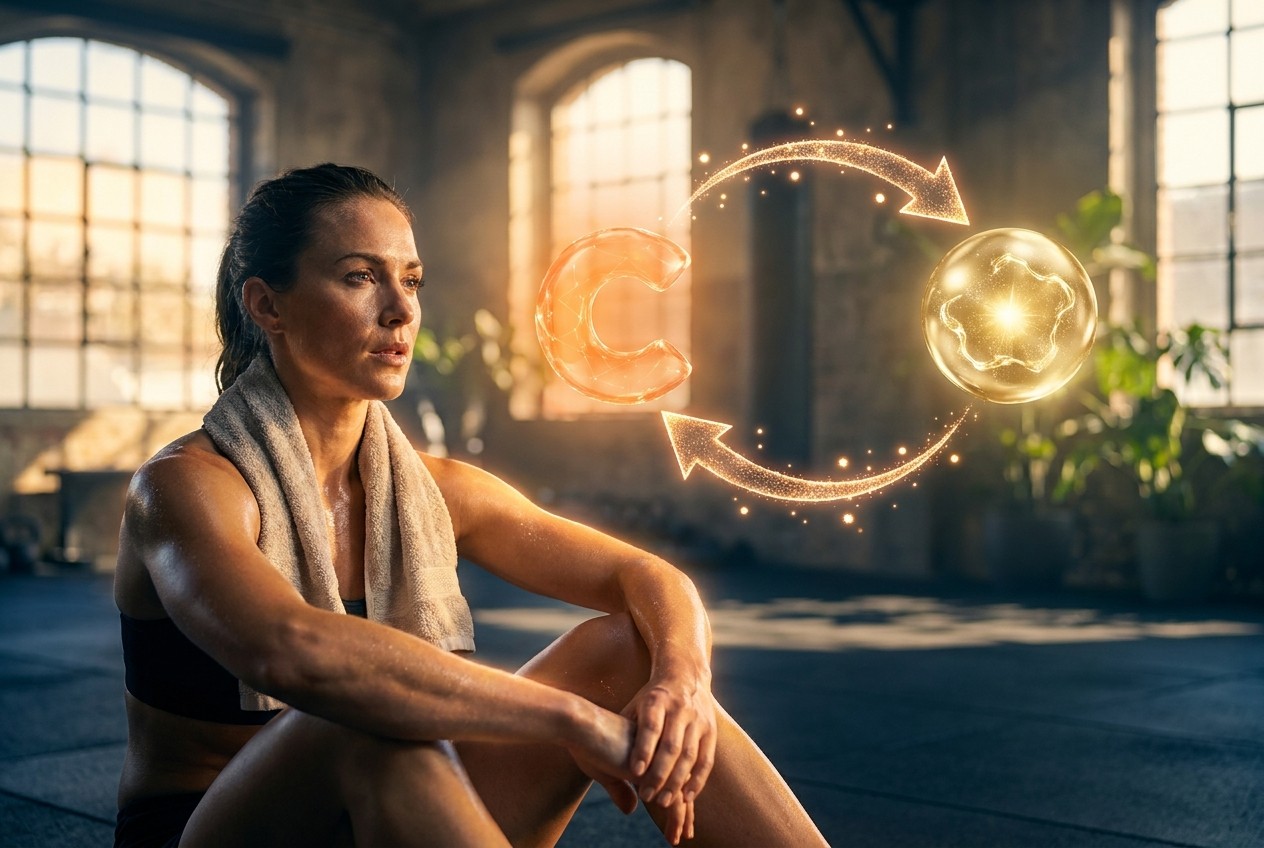
Vitamin C and glutathione are antioxidants that may support exercise recovery, and a shared biochemical recycling system suggests they could deliver an additive benefit when taken together, according to an Aug. 9, 2026, article by Molly Knudsen, M.S., RDN, published on mindbodygreen.
The article stated that exercise causes short-term inflammation, which may help the body adapt to training but should resolve in a timely manner. According to the report, an additive effect between the two nutrients is anticipated, but studies confirming combined intake have not been conducted.
The report drew on established antioxidant research. Free radicals are unstable molecules that travel around the body in search of stable molecules to bond with by stealing an electron to stabilize themselves, and when successful they create new unstable molecules, continuing the cycle, according to Dr. Karen Shaw Becker in a July 8, 2018, Mercola.com article [1]. Becker wrote that free radicals are unavoidable because they are produced during normal metabolic, cellular, and immune system activity, as well as by external factors such as vigorous exercise, a less-than-optimal diet, stress, and pollution [1].
How Vitamin C and Glutathione Work Together
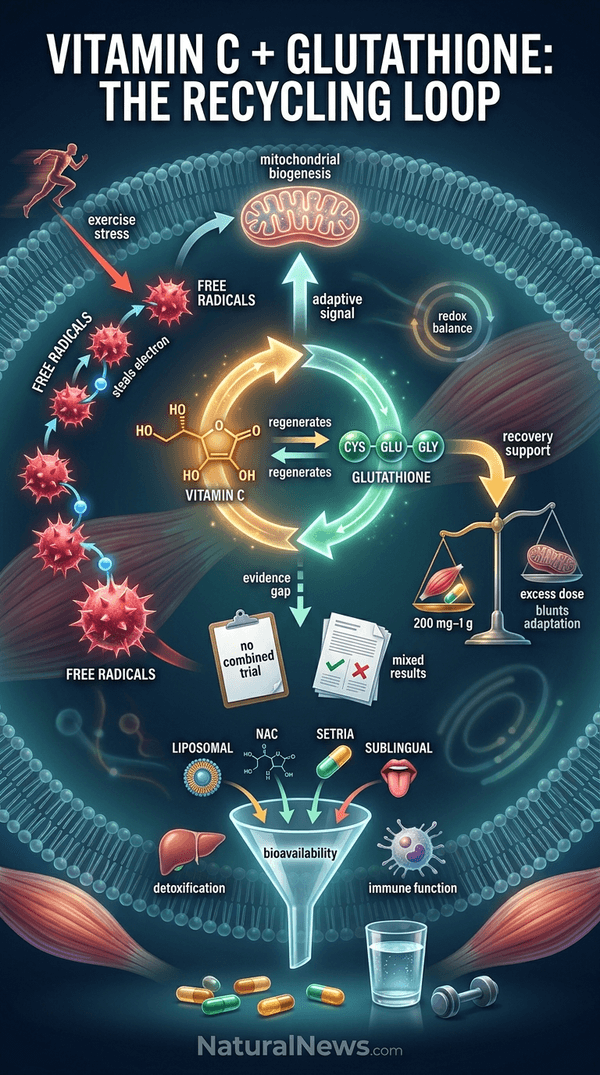
The article stated that both antioxidants cycle between active and inactive forms as they neutralize free radicals, and each helps convert the other back to its working state. When one runs low, the other’s ability to function takes a hit, according to the report.
That interdependence is why researchers suspect combined use could produce an additive effect, where the combined benefit is greater than either one alone, the article stated. The report described glutathione as a small molecule made from three amino acids — cysteine, glutamate, and glycine — and the most abundant antioxidant inside cells.
Other researchers have characterized glutathione as a compound that is present in nearly all tissues, helping manage oxidative stress and support detoxification, according to a May 5, 2026, NaturalNews.com report on glutathione’s role in protein folding and cellular aging [2]. The same report stated that glutathione exists in oxidized and reduced forms, and that the endoplasmic reticulum maintains a precise balance between them to facilitate proper protein bond formation [2]. A separate NaturalNews.com article published May 6, 2026, described glutathione as a tripeptide composed of cysteine, glutamic acid, and glycine that plays a critical role in detoxification, immune function, and cellular repair [3]. That report added that the body’s most powerful enzymatic antioxidant defenses, including glutathione peroxidase, depend on this system [4].
Research on Vitamin C and Exercise
Studies on vitamin C and exercise have been inconsistent, the article stated. Some research showed reduced oxidative stress and support for muscle recovery after hard training, while other research showed little to no performance effect, according to the report.
Differences in doses, exercise protocols, fitness levels, and measurement methods may explain the mixed results, the article stated. What holds up more consistently, according to the report, is that doses between 200 milligrams and 1 gram a day can lower oxidative stress, especially around intense exercise.
The published literature reflects similar variability. In a controlled human trial, dietary supplementation with vitamins C and E was tested against muscle function during and after eccentric contractions, according to a study cited in the book Antioxidants in Sport Nutrition, authored by Manfred Lamprecht [5]. A separate review of endurance exercise and oxidative stress, also contained in the same volume and attributed to researchers Lisa J. Elkington, Maree Gleeson, David B. Pyne, Robin Callister, and Lisa G. Wood, noted that the period of supplementation — long-term versus short-term — needs to align with the aims of a study, since training practice can be kept unaltered or altered to a different load [5][6]. One long-term clinical intervention study of an antioxidant functional beverage found that additional antioxidants beyond vitamins E, C, and A might have contributed to protection against exercise-induced oxidative stress, suggesting effects may depend on the full nutrient matrix rather than a single compound [7].
Research on Glutathione and Exercise
Glutathione research tells a similar story, according to the report: promising but mixed. Outcomes vary depending on the form used and how it was administered, the article stated. The core challenge, according to the report, is that glutathione is hard to study in supplement form because how much actually reaches cells depends heavily on the delivery method, and studies have used different ones, making direct comparisons difficult.
The article stated that most glutathione supplements are poorly absorbed and utilized by the body, and that Setria glutathione is one form of the compound that has been clinically studied to raise glutathione levels.
Sports nutrition literature has documented related findings. A combined amino acid cocktail that includes glutathione along with L-cysteine, N-acetylcysteine, glutamic acid, or glycine is thought to have a greater impact on body glutathione levels and consequent antioxidant benefit than taking glutathione alone, with doses generally ranging from 600 to 1,200 milligrams split into two doses throughout the day, according to The Athlete’s Guide to Sports Supplements by Kimberly Mueller [8]. Separately, N-acetylcysteine has been shown to enhance muscle cysteine and glutathione availability and attenuate fatigue during prolonged exercise in endurance-trained individuals, according to a study cited in Antioxidants in Sport Nutrition [5].
Case for Combining Them and Research Gaps
Even with the inconsistencies in the individual research, the biochemical link between the two gives researchers reason to think the combination could outperform either alone, the article stated. Because they share the same recycling system, supplementing both may help sustain it during and after hard exercise, according to the report.
Still, research specifically on the combined intake of vitamin C and glutathione and its effect on exercise is largely unexplored, the article stated. An additive effect is anticipated, but the studies to confirm it have not been done, according to the report.
The broader science literature has raised related questions about antioxidant supplementation in athletes more generally. The current enthusiasm for polyphenols as antioxidant agents that would prevent muscular damage and enhance performance does not rest on solid ground, and many more years of studies are required to clarify their precise role in sport, according to a conclusion contained in Antioxidants in Sport Nutrition [5]. The same volume noted that daily vitamin C supplementation has been shown in some cases to greatly inhibit peripheral adaptations to training, including capillarization and mitochondrial biogenesis, a finding that underscores why dose and context matter [5].
Takeaway
The article stated that vitamin C and glutathione are biochemically linked antioxidants, and that the biology makes a reasonable case for pairing them to recover from intense exercise. For vitamin C, the evidence supports 200 milligrams to 1 gram per day, according to the report. For glutathione, delivery method matters, and forms such as Setria glutathione or liposomal forms may absorb better than standard capsules, the article stated.
The report said the combined approach is promising rather than proven and would work best as part of a broader approach to a fitness routine. That broader approach includes the fundamentals — sleep, nutrition, and recovery habits — which traditional healing systems have long prioritized, according to a January 25, 2023, interview on Brighteon [9].
References
- Dr. Karen Shaw Becker. “Nature’s Answer to Inflammation, Help Safeguard Your Pet’s Health and Longevity”. Mercola.com. July 8, 2018.
- NaturalNews.com. “Study Details Glutathione’s Role in Protein Folding Processes Linked to Cellular Aging”. May 5, 2026.
- NaturalNews.com. “Glutathione: The master antioxidant your body needs and how to boost levels naturally”. May 6, 2026.
- NaturalNews.com. “The Selenium Shield: Master Your Body’s Antioxidant Defense for Vitality and Longevity”. May 30, 2026.
- Manfred Lamprecht. “Antioxidants in Sport Nutrition”.
- Lisa J. Elkington, Maree Gleeson, David B. Pyne, Robin Callister and Lisa G. Wood. “Antioxidants in Sport Nutrition”.
- Maria E. Muñoz. “Effect of an antioxidant functional food beverage on exercise-induced oxidative stress: A long-term and large-scale clinical intervention study”. Toxicology.
- Kimberly Mueller. “The Athlete’s Guide to Sports Supplements”.
- Mike Adams interview with Bashima Williams. January 25, 2023.
- Mike Adams. “Brighteon Broadcast News – COLLAPSE”. Brighteon.com. April 24, 2025.
Explainer Infographic
Submit a correction >>
Tagged Under:
antioxidant, cellular health, cellular stress, fitness, Glutathione, health science, longevity, natural health, nutrients, prevention, protein folding, recovery, research, scientific, Study, supplements, vitamins
This article may contain statements that reflect the opinion of the author