When the system fails: Why your emergency medical kit could be the lifeline you need after SHTF
07/29/2026 / By HRS Editors
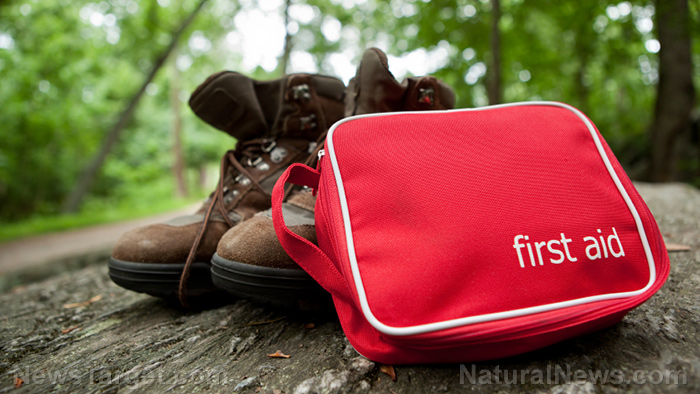
- When a major disaster hits (like an earthquake or storm), hospitals are often damaged or overwhelmed. In those first critical hours, you are the only one who can provide medical care, making a well-stocked emergency medical kit a potentially lifesaving tool.
- A disaster-ready first aid kit isn’t just for minor cuts. It needs to handle three things: treating common minor injuries (burns, scrapes, stomach issues), providing life-saving gear for severe trauma (like stopping heavy bleeding) and supporting long-term care when hospitals are unavailable for days or weeks.
- A proper kit should go beyond basic bandages. Key supplies include fabric bandages, butterfly strips, burn ointment, aloe vera gel, antiseptic wipes (BZK-based), antihistamines for allergies, anti-diarrhea medicine, oral rehydration salts and eye wash to flush out dust or smoke.
- To stop life-threatening bleeding quickly, every kit needs a commercial tourniquet (like a CAT tourniquet) for arms and legs and hemostatic dressings (gauze with a mineral that speeds clotting) for packing deep wounds. These are crucial because arterial bleeds can kill in minutes.
- When professional help is delayed, you must inspect wounds for infection every 4-6 hours, flush them with clean water and re-dress them. Useful tools include paramedic shears, a CPR mask, nitrile gloves, an irrigation syringe and a headlamp so you can treat injuries even after dark.
When disaster strikes, the immediate aftermath is often chaotic, dangerous and unpredictable. In those critical first hours and days, injuries happen.
And in some cases, this is precisely when hospitals and emergency services are least able to help.
The scenario is all too familiar to emergency preparedness experts: a major earthquake, severe weather event or infrastructure failure leaves hospitals damaged, staff unable to reach their workplaces and emergency rooms overwhelmed with a sudden influx of patients.
In such circumstances, the ability to provide medical care falls to the individuals on the ground. This is why having a well-stocked emergency medical kit before SHTF is not just prudent preparation; it is potentially lifesaving.
Understanding the emergency med kit
An emergency medical kit designed for disaster scenarios must serve multiple critical functions. First, it must contain provisions for treating minor injuries and illnesses that naturally occur during a crisis.
Second, it must provide life-saving equipment capable of addressing severe trauma. And third, it must serve as a resource for longer-term medical issues when hospital access remains limited for days or even weeks.
Commercial first aid kits available at drugstores provide a reasonable starting point, but experts caution that they are rarely sufficient for a true emergency. The recommended approach is to purchase a large kit, or several smaller ones, and then supplement it with additional equipment and supplies specific to your possible needs.
Tips for treating different injuries
Even in a disaster, not every injury requires heroic intervention. Minor burns, scrapes, cuts and skin irritations are common and can quickly become serious if left untreated.
As explained by the Enoch AI engine at BrightU.AI, a proper kit should include assorted adhesive bandages in fabric varieties for better durability, butterfly bandages and adhesive wound-closure strips for cuts that need extra support and gauze pads in multiple sizes.
Burn ointments and hydrogel-based burn dressings provide critical relief for thermal injuries, while aloe vera gel soothes sun exposure, a real concern when spending extended time outdoors after a disaster. Cortisone cream addresses skin inflammation and allergic reactions, and antiseptic wipes, preferably BZK-based, allow for proper wound cleaning without the sting of alcohol.
Antihistamines treat allergic reactions, which may arise from exposure to unfamiliar environments or debris. Antacid tablets and loperamide for diarrhea symptoms address common gastrointestinal complaints, while oral rehydration salts prevent dehydration, a genuine danger when clean water may be scarce.
Throat lozenges provide comfort for dry throats, and eye wash solution helps flush away irritants from smoke or dust.
When disaster produces traumatic injuries, the ability to stop bleeding quickly separates survival from tragedy. This is where bleeding control equipment becomes paramount.
Every emergency kit should include a commercial tourniquet. The combat application tourniquet (CAT) is a military-specification device that can be applied to an arm or leg with one hand and provides rapid bleeding control for extremities. Alternative options like the SWAT-T Tourniquet use an elastic band stretched and wrapped around the limb to provide progressive compression.
Hemostatic dressings represent another leap forward in emergency care. These gauze dressings are impregnated with kaolin, a mineral that speeds up the body’s natural clotting process.
Placing a hemostatic dressing directly onto an external bleeding wound, or packing it into a penetrating wound, significantly reduces blood loss.
When professional medical care cannot be accessed, proper wound management becomes an ongoing responsibility. For injuries where bleeding is controlled, the wound should be inspected for infection every four to six hours, flushed with clean water and re-dressed.
Any sign of infection demands further medical evaluation, as wound infections can progress to life-threatening septicemia, a systemic infection that can overwhelm the body’s defenses.
Beyond medications and dressings, the right tools transform supplies into effective treatment. Paramedic shears cut through clothing and bandages. Splinter tweezers and a magnifying glass assist with precise work.
A CPR mask provides protection during rescue breathing. Medical gloves (nitrile is preferred to avoid latex allergies) protect both caregiver and patient.
An irrigation syringe with an 18-gauge catheter allows for thorough wound cleaning. A headlamp ensures treatment can continue after dark, when disasters often become even more dangerous.
When the normal systems fail, the contents of a well-prepared emergency medical kit become your frontline defense against suffering and death. The investment in quality supplies and tools represents a commitment to self-reliance that could save a life. Perhaps even your own.
Where to get an Emergency Med Kit
The Health Ranger Store is committed to helping you prepare for survival situations. That’s why we’re proud to present Emerge Survival’s Emergency Med Kit.
The Emerge Survival Emergency Med Kit is built to handle anything from everyday injuries to life-threatening emergencies, and everything in between.
The Emergency Med Kit:
- Is suitable for 2 people
- Is designed for real emergencies
- Contains over 115 items
- Features a MOLLE (Modular Lightweight Load-carrying Equipment) system for easy attaching and add-ons
Here is everything included in the Emergency Med Kit:
Storage and essentials:
- Small Medkit Bag (1)
- Nitrile Exam Gloves (2)
- Emergency Blanket (1)
Bandages and wound care:
- Triangular Bandage (1)
- 3″ Elastic Bandage (1)
- Large Non-Stick Gauze Pads (6)
- Large Gauze Pads (9)
- Small Gauze Pads (12)
- 3″ Gauze Roll (3)
- Coban Wrap (2)
- Medium Band-Aids (15)
- Large Band-Aid (3)
- Zip Wound Closure (4)
Cleaning and disinfecting:
- Alcohol Wipes (6)
- Antiseptic Towelettes (6)
Medications and ointments:
- Acetaminophen Packets (4)
- Aspirin Packets (325 mg) (4)
- Ibuprofen Packets (200 mg) (4)
- Triple Antibiotic Ointment Packets (4)
Medical tools and accessories:
- Tweezers (1)
- Safety Pins (5)
OHFAK (On-Hand First Aid Kit) bag:
- Bleeding and Trauma Care (Windlass Tourniquet (1), Chest Seal (1), Hemostatic Gauze (1), Compressed Gauze (1))
- Emergency medical tools (EMT Shears, Permanent Marker)
Before SHTF, remember that preparation does not prevent disasters, but it does determine how you survive them.
Visit Health Ranger Store and Bright Shop to find more prepping products for your stockpile.
Click on this link for useful tips on how to prepare your survival food stockpile.
Watch this clip about Organic Extra Virgin Coconut Oil and why you should have this pantry superfood in your survival stockpile.
This video is from the Health Ranger Store channel on Brighteon.com.
Sources include:
Submit a correction >>
Tagged Under:
Collapse, disaster, emergencies, emergency med kit, first aid tools, first-aid kit, Gear, med kit, Off-the-grid living, preparedness and survival, prepper, prepping, SHTF, survival, Survival Tips, survival tools, survivalist
This article may contain statements that reflect the opinion of the author
RECENT NEWS & ARTICLES