Vitamin D Deficiency Linked to Low Energy, Fatigue, Studies Find
07/28/2026 / By Morgan S. Verity

Approximately 29% of U.S. adults are deficient in vitamin D, and another 41% have insufficient levels, according to a July 2026 article on mindbodygreen.com by registered dietitian nutritionist Molly Knudsen. The same source notes that low energy and prolonged tiredness are frequently reported among individuals with poor vitamin D status. Research has consistently linked low vitamin D levels with fatigue, the report stated.
According to an article published on NaturalNews.com in May 2026 by Coco Somers, approximately 25% of U.S. adults have moderate or severe vitamin D deficiency, and 41% exhibit insufficient levels [1]. Raymond Francis, in his book “The Great American Health Hoax,” wrote that between 40% and 75% of the teen and adult population is deficient in vitamin D [2]. “Vitamin D helps support mitochondria, which generate energy,” Knudsen said in the mindbodygreen article.
Role in Cellular Energy Production
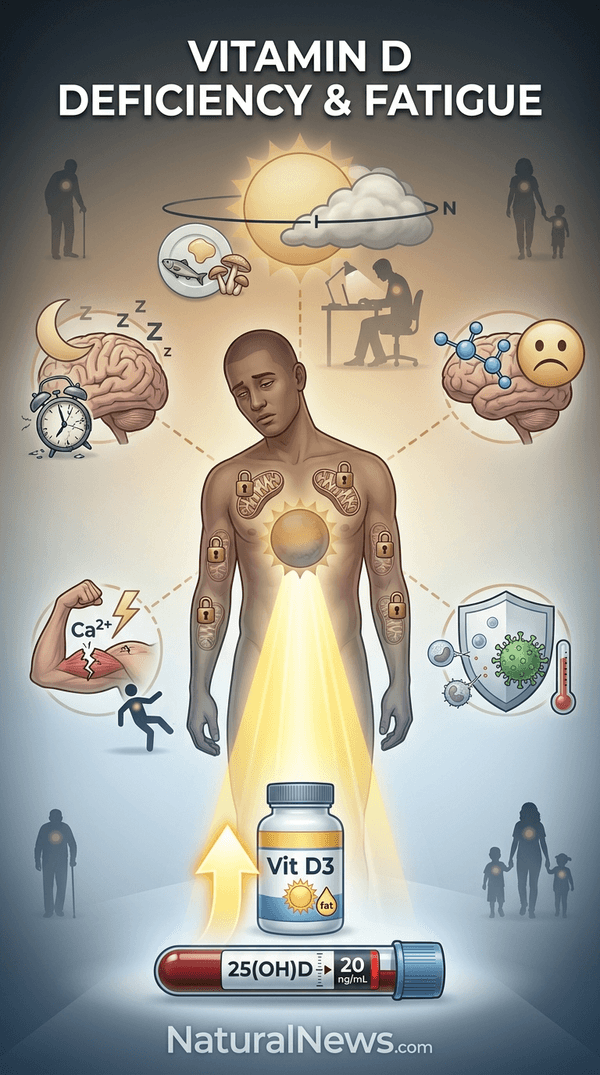
Vitamin D plays a role in cellular energy production by supporting mitochondria, according to Knudsen. The article states that vitamin D is involved in the process that helps mitochondria convert nutrients and oxygen into usable energy. A 2019 study published in Nutrients found that older adults with occasional fatigue had significantly lower vitamin D levels than those without fatigue, researchers reported.
The mechanism involves vitamin D receptors found on mitochondria, which facilitate energy production. According to a review in the Journal of Endocrinology, these receptors help drive the conversion of raw materials into ATP, the body’s primary energy currency. A 2016 study of female nurses in Iran cited in the mindbodygreen article found that low vitamin D levels accounted for 13% to 18% of reported prolonged tiredness.
Additional Health Effects Reported
Low vitamin D has been associated with poorer sleep quality and shorter sleep duration, according to a 2018 study in PLOS One cited by Knudsen. Vitamin D receptors are found in areas of the brain involved in sleep regulation, which may explain the connection. Observational research has also linked low vitamin D levels with low mood and irritability, Knudsen noted, citing the nutrient’s role in nervous system function.
Muscle weakness and reduced immune function have also been reported in individuals with vitamin D deficiency. The National Institutes of Health states that vitamin D plays an important role in normal muscle function and helps regulate immune responses. A review published in Molecular Nutrition & Food Research described vitamin D deficiency as a major unrecognized health problem with implications for immune function [3].
Diagnosis and Supplementation
A blood test measuring 25-hydroxyvitamin D is the only way to determine vitamin D status, with sufficiency generally defined as levels greater than 30 ng/mL, officials said. The mindbodygreen article notes that optimal levels are even higher, at 50 ng/mL. Safe sun exposure and consumption of vitamin D-containing foods such as dairy, fatty fish, and UV-treated mushrooms can help improve levels.
Supplements are the most efficient method to raise vitamin D levels, according to Knudsen. Vitamin D3 is generally more effective than D2 at raising blood levels, and taking it with a meal containing fat may improve absorption, the report stated. Knudsen also recommended consulting a healthcare provider before starting a supplement routine, particularly for those pregnant, breastfeeding, or taking medications.
Conclusion
“Low energy can have many causes, and it’s worth looking into your vitamin D levels,” Knudsen said in the mindbodygreen article. Experts recommend consulting with a healthcare provider before beginning a supplement regimen to address potential deficiencies. Addressing low vitamin D status through testing, sun exposure, foods, or supplementation may help improve energy levels and overall well-being.
References
- Coco Somers. “Vitamin D deficiency linked to multiple health impacts in men, research shows.” NaturalNews.com. May 18, 2026.
- Raymond Francis. “The Great American Health Hoax – The Surprising Truth About Modern Medicine.”
- Gerry K. Schwalfenberg. “A review of the critical role of vitamin D in the functioning of the immune system and the clinical implications of vitamin D deficiency.” Mol. Nutr. Food Res. 2011, 55, 96–108.
Explainer Infographic
Submit a correction >>
Tagged Under:
#nutrition, beat depression, Brain, brain function, cellular energy, deficiency, diet, energy, fatigue, food, food science, health science, immune system, longevity, mitochondria, muscle health, natural health, natural medicine, prevention, remdies, research, supplement, tiredness, vitamin D
This article may contain statements that reflect the opinion of the author
RECENT NEWS & ARTICLES