
Microplastics found in baby food pouches: 5,000 particles per serving raise alarm for infant health
07/04/2026 / By Willow Tohi
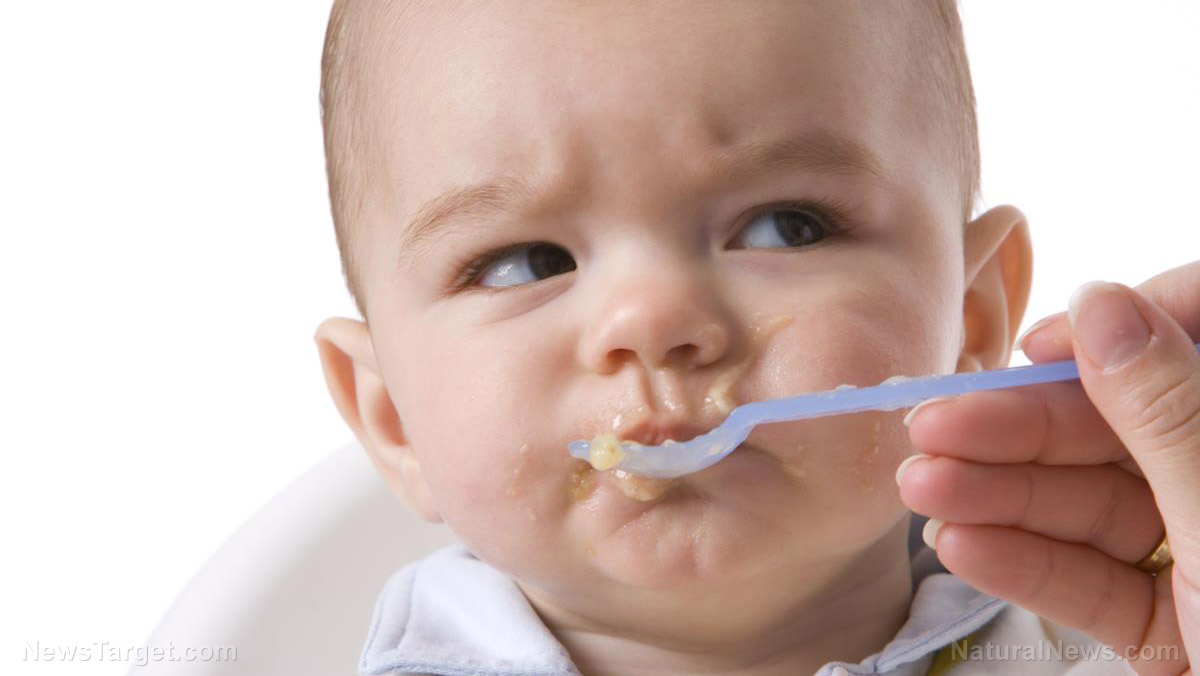
- A single Gerber baby food pouch contains an estimated 5,000 microplastic particles, with Happy Baby Organics pouches showing up to 11,000 particles per pouch.
- Microplastics are made from more than 16,000 chemicals, including 4,200 known to harm human health, with babies uniquely vulnerable due to rapid organ development.
- Greenpeace investigation found microplastics in every baby food pouch tested, tracing the likely source to the plastic lining of the pouches themselves.
- Congress could close a decades-old loophole allowing plastic producers to self-determine packaging chemical safety, but action remains stalled.
- Daily microplastic intake for formula-fed infants is estimated at 49 particles per day, posing potential lifelong health risks.
The hidden ingredient in baby food
A new investigation commissioned by Greenpeace International has detected microplastics in every baby food pouch tested, revealing that a single Gerber pouch contains an estimated 5,000 microplastic particles and a Happy Baby Organics pouch contains more than 11,000 particles. The findings, published in the report “Tiny Plastics, Big Problem,” trace the likely source to the plastic lining of the pouches themselves. With millions of single-use squeezable pouches used daily worldwide, millions of infants may be ingesting invisible contaminants with every meal. Researchers identified at least one endocrine-disrupting chemical in both the packaging and the food.
The science behind the contamination
Plastic is made from more than 16,000 chemicals, including 4,200 known to harm human health. When plastic packaging degrades, it breaks into microplastics — particles smaller than 5 millimeters — that leach into food. A recent study found microplastics in all 30 infant formula products tested, with the most frequently identified polymers being polyamide, polyethylene, polypropylene and poly(ethylene terephthalate). Researchers estimated daily microplastic intake for formula-fed infants at approximately 49 particles per day, posing what they called “a potential health risk for the youngest.”
Babies are uniquely vulnerable. Their organs and nervous systems are developing rapidly, and even small exposures to hormone-disrupting chemicals during formative months can have lifelong effects on growth, metabolism and reproductive systems. Microplastics have now been detected in human placenta, breast milk and bottled water.
A global health crisis for the youngest
Microplastics have been found in 93% of bottled water tested globally, with consumption expected to reach 515 billion liters annually by 2027. These particles have been detected in human blood, where they can travel throughout the body and potentially lodge in organs. Studies in mice show that once microplastics reach the brain, they can cause cognitive changes similar to dementia. Microplastics have been linked to cancer, hormone imbalances, fertility problems, heart disease and Parkinson’s disease. Their toxicity is enhanced by particle size, shape and surface charge. Microplastics also provide niches for antibiotic-resistant microbial colonies, potentially releasing toxins into the human body.
A regulatory gap decades in the making
Under existing U.S. rules, plastic producers and food companies determine for themselves whether packaging chemicals are safe — a decades-old loophole Congress can close. The current administration campaigned on protecting children’s health and declared a war on microplastics, yet parents report frustration with the slow pace of change. This regulatory gap has historical precedent: previous generations successfully eliminated lead from toys, demanded safer cribs and adopted car safety standards that saved countless lives. Advocates argue babies should not be subjects in a science experiment to which they cannot consent.
The scale of plastic production and exposure
The baby food pouch market grows by more than 8% annually, with multilayered flexible plastic packaging forecast to grow by 5.3% year-on-year through 2035. Microplastics are categorized as primary (deliberately manufactured small, like microfibers and microbeads) or secondary (from discarded waste like bags and bottles, taking up to 450 years to degrade). Bottle-fed babies face particularly high exposure risk, though microplastics have also been found in breast milk.
What parents can do now
Experts recommend avoiding food and drinks in plastic containers, refusing to let babies eat from plastic pouches, and contacting companies demanding safer packaging. Activists have long warned against pouches: they contain overly sweet foods, offer homogeneous textures that don’t teach babies about real food, and undermine baby-led weaning. The Greenpeace report found up to 270 microplastic particles per teaspoon in Gerber pouches and up to 495 in Happy Baby Organics, suggesting a direct link between the polyethylene lining and contamination.
The path forward: History as a guide
This moment echoes previous public health victories. Americans successfully pushed to eliminate lead from toys, demanded safer cribs and adopted car safety standards that saved countless children’s lives. The same resolve is needed now to close the regulatory loophole allowing plastic producers to self-certify packaging chemicals as safe. More than 250 health professionals have called on the EPA to add microplastics to drinking water monitoring rules. Earthday.org is calling for a 60% reduction in plastic production by 2040. While the oil and gas industry pushes recycling, critics argue reducing plastic production itself is the only meaningful path.
A call for the last generation of plastic-fed babies
Congress has a real opportunity to close the loophole and help prevent microplastic exposure, particularly for children. Every piece of plastic ever created is still here. Ours should be the last generation of babies forced to grow up in a food system that puts plastic and profits over long-term health. No parent should have to be a scientist to feed their children safely. The evidence is clear enough to justify action now — not after more research, but before another generation of infants becomes unwitting participants in an uncontrolled experiment.
Sources for this article include:
Submit a correction >>
Tagged Under:
baby food, chemicals, clean food watch, Dangerous, discoveries, EPA, food science, food supply, frankenfood, grocery, infant health, ingredients, microplastics, poison, products, real investigations, stop eating poison, toxins
This article may contain statements that reflect the opinion of the author