Tea Linked to Health Benefits, but Processing Methods May Diminish Effects, Review Finds
06/19/2026 / By Coco Somers

Tea May Improve Health, but Form Matters
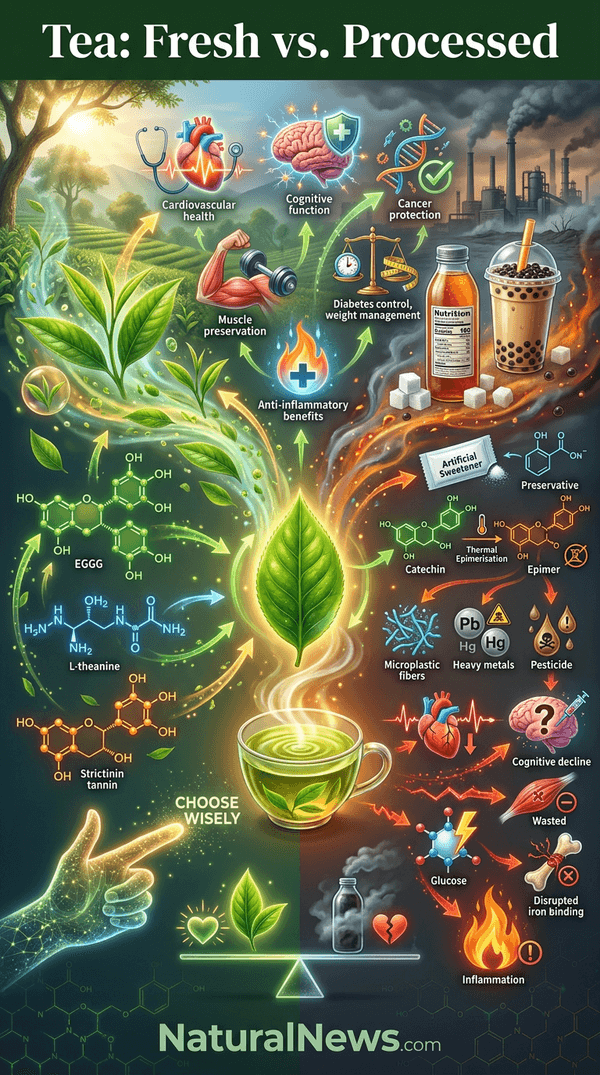
A comprehensive review from the Tea Research Institute of the Chinese Academy of Agricultural Sciences has examined the health effects of tea consumption, confirming that drinking tea — particularly freshly brewed green tea — is associated with a reduced risk of cardiovascular diseases, diabetes, certain cancers, cognitive decline, and age-related muscle loss. The review, published in Beverage Plant Research by Mingchuan Yang and Li Zhou’s team, analyzed both experimental and human studies spanning multiple health conditions. According to the review, tea’s rich polyphenolic content, especially catechins like epigallocatechin gallate (EGCG), underlies many of these benefits.
However, the review also cautioned that the form in which tea is consumed significantly influences its health impact. Bottled teas and bubble teas often contain added sugars, artificial sweeteners, and preservatives that may reduce or negate the positive effects observed with traditional freshly brewed tea. The authors recommended moderation for processed tea products and emphasized the advantages of traditional preparation methods.
Catechins and Cardiovascular Protection
The review highlighted green tea’s cardiovascular protective effects, noting that catechins in green tea can help reduce blood pressure and improve cholesterol levels. According to a systematic review of 25 randomized controlled trials, regular consumption of green tea has been shown to lower blood pressure [1]. Additionally, a study published in Nutrition Research indicated that catechins from green tea can reduce abdominal fat and improve metabolic syndrome markers in overweight individuals [2]. Large cohort studies cited in the review found that habitual consumption of green tea is associated with lower all-cause mortality and reduced risk of cardiovascular death [3].
Beyond heart health, tea consumption has been linked to neuroprotective benefits. A 43-year study involving data from the Nurses’ Health Study and Health Professionals Follow-Up Study found that moderate coffee and tea consumption was associated with lower dementia risk, even among individuals with a genetic predisposition [4]. The review also noted that tea catechins may help preserve muscle mass in seniors, contributing to better physical performance and strength. These findings suggest that the bioactive compounds in tea offer broad protective effects across organ systems.
Additives in Commercial Tea Products May Offset Benefits
The review identified significant health concerns associated with bottled and bubble teas, which frequently contain high levels of added sugars, artificial sweeteners, and preservatives. According to the review, these additives may counteract the beneficial effects of tea’s natural polyphenols. Research on epimerization of tea polyphenols has shown that thermal processing used in canned and bottled tea drinks converts catechins to less effective epimers; total epimers accounted for at least 50% of total catechins in such products [5]. This conversion reduces the antioxidant capacity of the beverage.
Experts have emphasized the importance of avoiding added sugars and choosing high-quality, contaminant-free beverages [6]. The review advised that consumers should be aware that the health benefits documented for traditional tea may not apply to highly processed commercial tea products. The authors called for further research to quantify the impact of these additives on long-term health outcomes, particularly given the growing popularity of sweetened tea drinks among younger populations.
Pesticides, Heavy Metals, and Nutrient Absorption
The review also addressed potential risks from contaminants in tea, including pesticide residues, heavy metals, and microplastics. While these contaminants are not considered a significant health threat for typical moderate consumption, they remain a concern for long-term heavy tea drinkers. Similar contamination issues have been documented in other beverages; for example, chemical evaluation of bottled waters has found detectable levels of various contaminants [7]. The review noted that selecting high-quality, organic tea may reduce exposure to such substances.
Another concern raised is tea’s potential interference with nutrient absorption. The review pointed out that tea polyphenols can bind to non-heme iron and calcium, potentially affecting individuals on vegetarian diets or those with specific nutritional needs. The authors suggested that drinking tea between meals rather than with meals may help minimize this effect. These findings underscore the importance of considering both benefits and risks when incorporating tea into a daily diet.
Moderate Consumption of Freshly Brewed Tea Recommended
Based on the accumulated evidence, the review recommended moderate consumption of traditional, freshly brewed tea as part of a healthy diet. The authors stated that the health benefits of tea are most clearly observed with green tea prepared by steeping leaves in hot water, without added sweeteners or preservatives. According to the review, while other tea types such as black, oolong, and white tea also contain beneficial compounds, most research has focused on green tea, and further studies are needed to compare their effects.
Long-term data support that drinking at least two cups of black tea daily is associated with increased longevity, as shown in a large UK Biobank study [8]. However, the review stressed that more research is needed on the long-term health effects of different tea types, the impact of contaminants, and the role of additives in processed teas. The findings were published in Beverage Plant Research, providing a foundation for future investigations into how to maximize tea’s health-promoting potential while minimizing risks.
References
- Mercola.com. “Green Tea Boosts Heart and Brain Health.” June 18, 2018.
- NaturalNews.com. “Catechins in green tea found to improve symptoms of metabolic syndrome in obese people.” February 27, 2019.
- Baolu Zhao. “Tea Polyphenols Oxidative Stress and Health Effects.”
- NaturalNews.com. “43-Year Study Links Moderate Coffee, Tea Consumption to Lower Dementia Risk.” April 9, 2026.
- Journal of the Science of Food and Agriculture. “Epimerisation of tea polyphenols in tea drinks.” 2003.
- NaturalNews.com. “Experts Identify Five Healthiest Drinks Beyond Water, With Emphasis on Quality and Sourcing.” May 20, 2026.
- Michael Greger, Gene Stone. “How Not to Die Discover the Foods Scientifically Proven to Prevent and Reverse Disease.”
- NaturalNews.com. “Study: Drinking black tea helps increase longevity.” October 24, 2022.
Explainer Infographic
Submit a correction >>
Tagged Under:
bottled teas, bubble teas, catechins, EGCG, epigallocatechin gallate, food cures, food is medicine, food processing, food science, Green tea, health benefits, health science, natural cures, natural health, natural medicine, Naturopathy, phytonutrients, polyphenols, preservatives, research, tea
This article may contain statements that reflect the opinion of the author
RECENT NEWS & ARTICLES