How lifelong exercise rewrites the immune system’s aging script
12/18/2025 / By Ava Grace
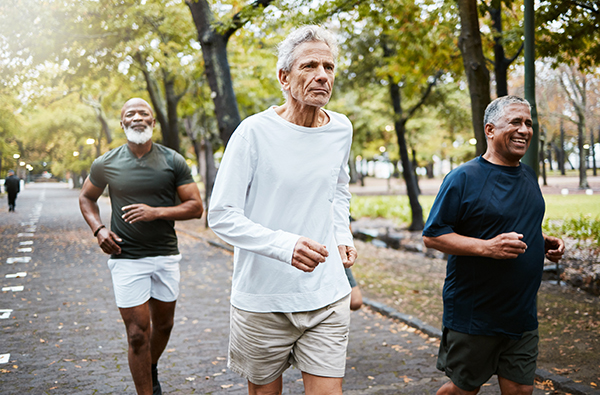
- Lifelong endurance exercise reprograms the immune system in older adults, giving them immune cells with the functional vigor of much younger individuals, fundamentally challenging the idea of inevitable immune decline with age.
- In endurance athletes, these critical immune cells remain highly effective at destroying threats, defying the typical age-related sluggishness and exhaustion known as immunosenescence.
- Under laboratory stress tests, they continue to function even when key communication pathways are blocked and they generate more energy with larger reserves, preventing burnout.
- Athletes’ cells mount a precise, controlled response to threats, avoiding the damaging, chronic low-grade inflammation linked to age-related diseases, showing more regulated control than even young athletes.
- The study reframes exercise as an investment in “immune resilience,” suggesting consistent endurance activity is not a stress that suppresses immunity but a foundational practice that trains the body’s defenses at a cellular level for healthier aging.
In a discovery that fundamentally challenges our understanding of aging and immunity, an international team of scientists has uncovered that the bodies of older endurance athletes harbor a biological secret: immune cells that function with the vigor and efficiency of youth.
Published in the journal Scientific Reports, the research reveals that decades of sustained physical exercise—like running, cycling and swimming—does more than build muscle and stamina. It reprograms the very cells that defend the body against disease, offering a powerful new dimension to the concept of healthy aging.
For generations, the narrative of aging has been one of inevitable decline, where the body’s defenses grow weaker and more prone to malfunction. This new evidence turns that script on its head, suggesting that a key element of aging is not a fixed destiny but a malleable process profoundly influenced by lifestyle. The implications are staggering for an aging global population increasingly burdened by chronic, inflammation-driven diseases.
Natural killers: The body’s frontline defense
At the heart of this breakthrough are natural killer (NK) cells, a critical type of white blood cell. They constantly patrol the body, identifying and destroying virus-infected cells, abnormal cells and early-stage cancer cells without needing prior exposure. They are our first line of internal defense. As people typically age, these cellular sentinels become sluggish, prone to excessive inflammation and easily exhausted. This process, according to BrightU.AI‘s Enoch, is known as immunosenescence.
The study, led by researchers from São Paulo State University (UNESP) in Brazil and Justus Liebig University Giessen in Germany, compared NK cells from two groups of 64-year-olds: one group had been sedentary, while the other had engaged in endurance training for over 20 years. The difference was not subtle; it was revolutionary. The athletes’ NK cells defied the expected pattern of aging entirely.
To understand the depth of this advantage, scientists subjected the NK cells to extreme laboratory stress tests. They used drugs to block key cellular communication pathways—specifically, pathways for adrenaline and for growth signals—that are vital for immune cell function. Under conditions designed to induce failure, the cells from sedentary individuals faltered and exhausted. The athletes’ cells, however, kept functioning effectively.
The superiority of the athletes’ immune cells extended to their very core: their energy production. Researchers found these cells generated significantly more energy and maintained larger energy reserves than their sedentary peers.
Mastering the flame of inflammation
Perhaps the most significant finding relates to inflammation, a double-edged sword in immunity. Acute inflammation is necessary to fight infection, but chronic, low-grade inflammation is a destructive force linked to nearly every age-related ailment, from heart disease and diabetes to cancer and dementia.
The research showed that the endurance-trained older adults had far superior control over this inflammatory response. When exposed to simulated infections in the lab, their cells mounted a measured, effective defense without the excessive, damaging inflammatory flare seen in cells from sedentary individuals. Strikingly, master athletes in their 50s and 60s demonstrated more regulated inflammatory control than even highly trained athletes in their 20s.
This indicates that lifelong exercise doesn’t blunt the immune response; it educates it. The system learns through decades of repeated, acute inflammatory episodes from exercise to respond with precision—powerful enough to be effective, but controlled enough to avoid collateral damage to the body’s own tissues.
From bed rest to biological resilience
This research marks a pivotal moment in a long-evolving understanding of human health. For much of medical history, rest and conservation of energy were seen as paramount for recovery and longevity. The 20th century’s focus on cardiovascular health cemented exercise as vital for the heart, but often framed it as a stressful, catabolic activity that could temporarily suppress immunity.
This new study powerfully refutes that narrow view. It positions consistent, lifelong endurance training not as a stressor to be managed, but as a foundational investment in “immune resilience.”
It suggests that the body is not a machine that wears out with use, but a dynamic system that adapts and strengthens when challenged correctly. In an era defined by a pandemic and rising chronic disease, the idea that we can biologically train our defenses is transformative.
The conclusion is inescapable and carries a weight that transcends mere medical advice. The study provides robust, cellular-level evidence that the choices we make over decades—to move consistently and vigorously—directly sculpt our biological aging process. It shows that the immune system, long thought to decline on a fixed schedule, is instead highly trainable.
This is not about achieving athletic prowess, but about cultivating a resilient biology. It argues that the path to a healthier, more defensible old age is paved with sustained physical effort.
Watch and learn about exercise and longevity.
This video is from the Holistic Herbalist channel on Brighteon.com.
Sources include:
Submit a correction >>
Tagged Under:
aging, aging science news, Athletes, exercise, function vigor, health science, immune defense, immune resilience, immune system, longevity, natural cures, natural medicine, prevention, remedies, research
This article may contain statements that reflect the opinion of the author
RECENT NEWS & ARTICLES